Put your keyword in these 4 places to rank
Google reads a few fixed places on a page to work out what it's about. Get those right and the rest of the page can be written for people, not for a crawler. This improves the ability for search engines to rank your pages, and it takes ten minutes per page.
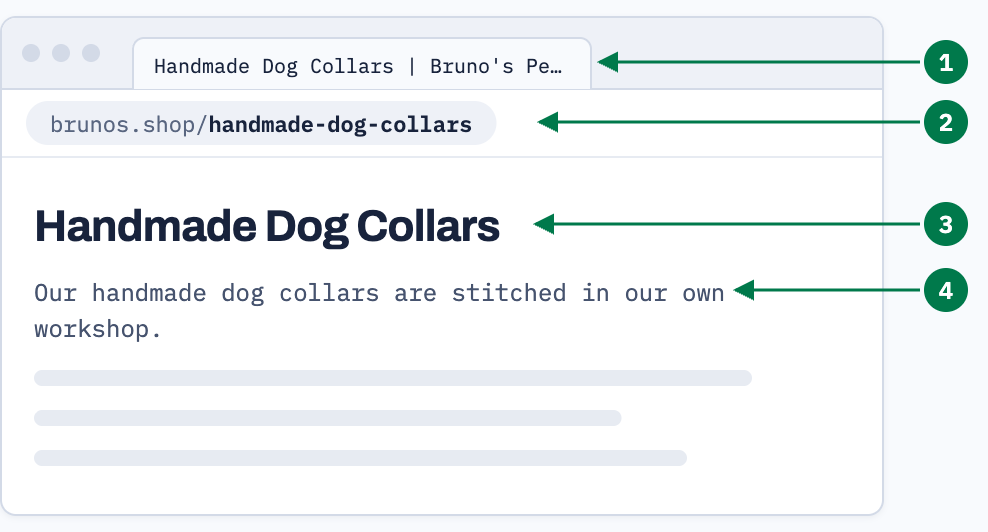
Say you want a page to rank for "handmade dog collars". Here are the steps:
- Put the words in the page title
- Put them in the URL, like
/handmade-dog-collars - Put them in the main heading on the page
- Put them in the first sentence
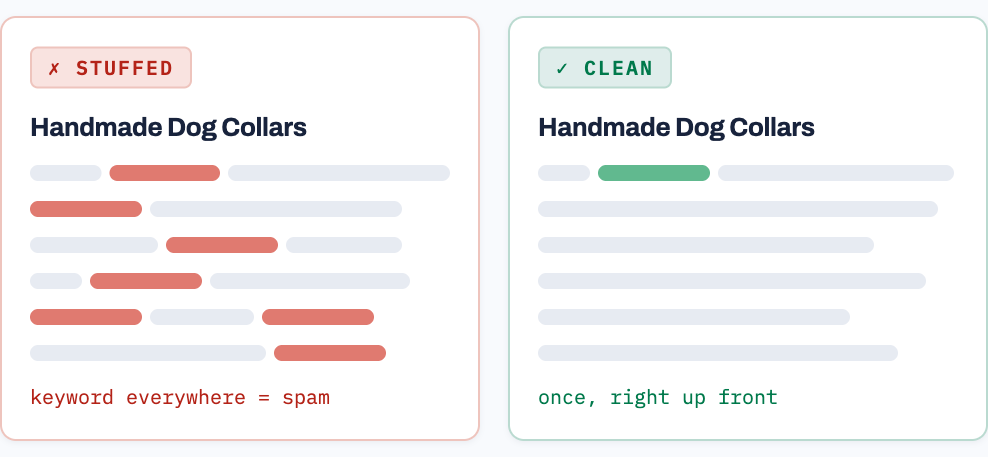
Don't repeat the keyword all over the page. Write the rest like you'd explain it to a customer.
The URL counts the most
Google reads the URL before it even opens your page, so it's the strongest of the four. Generic names do nothing: a page at /shop/red-collar gets no help from /shop/. The keyword has to be in the page's own part of the URL.
More mentions make things worse
The instinct is to work the keyword frequently into different paragraphs. People who run SEO tests keep seeing the opposite: take keywords out of a stuffed page and it often ranks higher. To Google, a page that repeats its keyword twenty times looks like spam.
Pages in that 8 to 20 range are the ones to start with. Google already sees them as candidates, and a placement fix is often all they're waiting for. If your Search Console data is wired into Claude over MCP, finding them is one prompt. Note where each page stands before you change it: Search Console only keeps 16 months of data, and judging the fix a year from now needs that "before". And once the four places are right, the same page is usually your best candidate for ranking for more keywords.